waterfront
What's nearby

Local area

A coastal fort on the doorstep, a Norman keep just down the road, an Elizabethan fortress on the Medway, a Dickens-haunted churchyard, an internationally-important wetland reserve, gorillas, oysters and a stretch of Thames Estuary shoreline you can walk straight onto from the park. The amber pin shows where you'll be staying; the red pins are the seventeen destinations on this page. Hover any pin for a preview, or click one to jump to its full description below.

You are hereDestination
0.1 miles · walking distance from the park

Slough Fort

A Victorian artillery fort on your doorstep

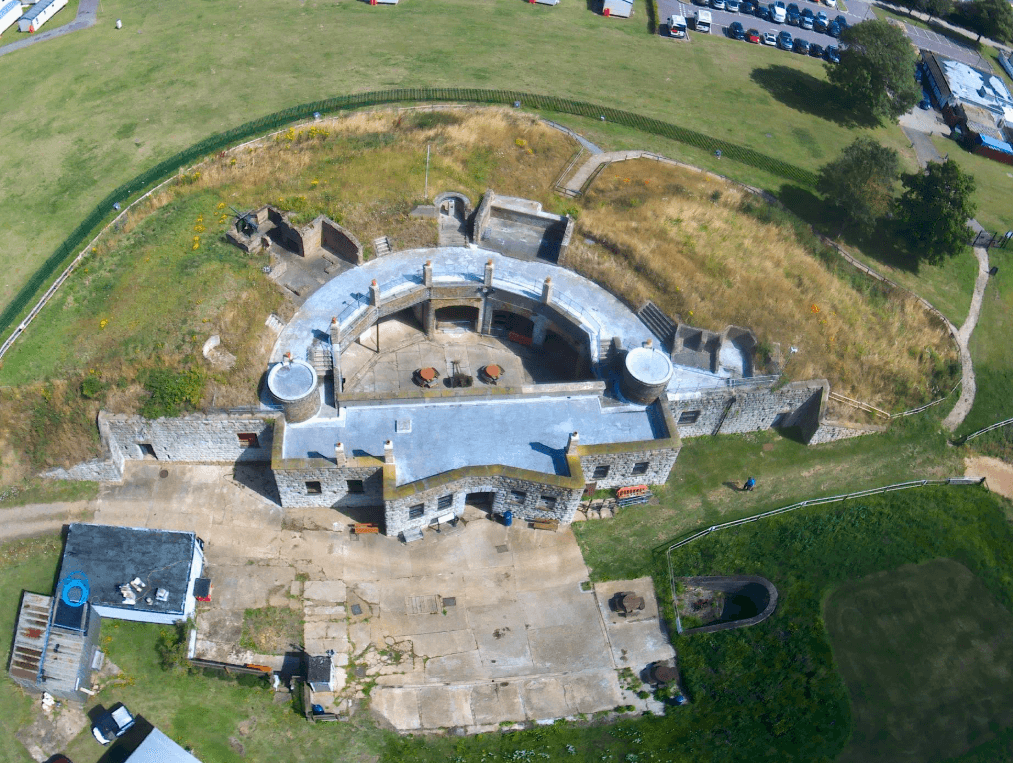
Slough Fort is a small D-shaped artillery fort just inland of the seawall in Allhallows, built in 1867 as part of the Palmerston coastal defences. Seven granite-faced casemates faced down the Thames, originally armed with 7-inch rifled breech-loading guns and upgraded in the 1890s to disappearing-mount 9.2-inch and 6-inch guns to impede enemy shipping heading up the estuary toward London.

From garrison to listed monument

The army left in 1920 and sold the fort in 1929, after which it had several civilian uses — including a brief stint as a small zoo. Today it's a Grade II listed monument in private ownership and the casemates have been adapted as stables. It's occasionally opened for tours and heritage open days — worth watching local listings if you're a history buff.
0.4 miles · on the doorstep

Estuary Beach

The Hoo Peninsula shoreline at the bottom of the park

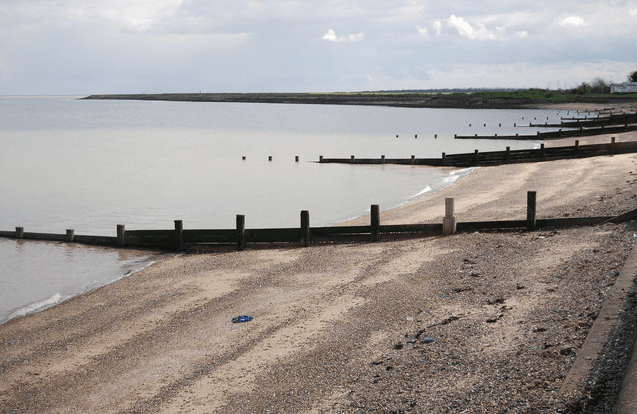
Step off the holiday park and you're on the northern edge of the Hoo Peninsula, looking out over the Thames Estuary. This is reckoned to be the nearest conventional seaside beach to London, and at low tide it stretches into a wide expanse of sand, shell and dark estuarine mud. Groynes hold the foreshore in place; behind them, the seawall and grass slope run the length of the park.

Beachcombing, walking and wildlife

The mix of sand and mud is brilliant for beachcombing — shells, driftwood and tide-line finds appear with every change of water. Footpaths wind off along the marsh and across the Hoo Peninsula, with remote estuary views and plenty of wading birds, gulls and small migratory wildlife to spot. There's no lifeguard service, so check the tide times before walking out, and don't go past the marker posts when the tide's rising.


3.1 miles · 15 minutes by car

Cooling Castle & St James' Church

A 14th-century gatehouse on the marsh

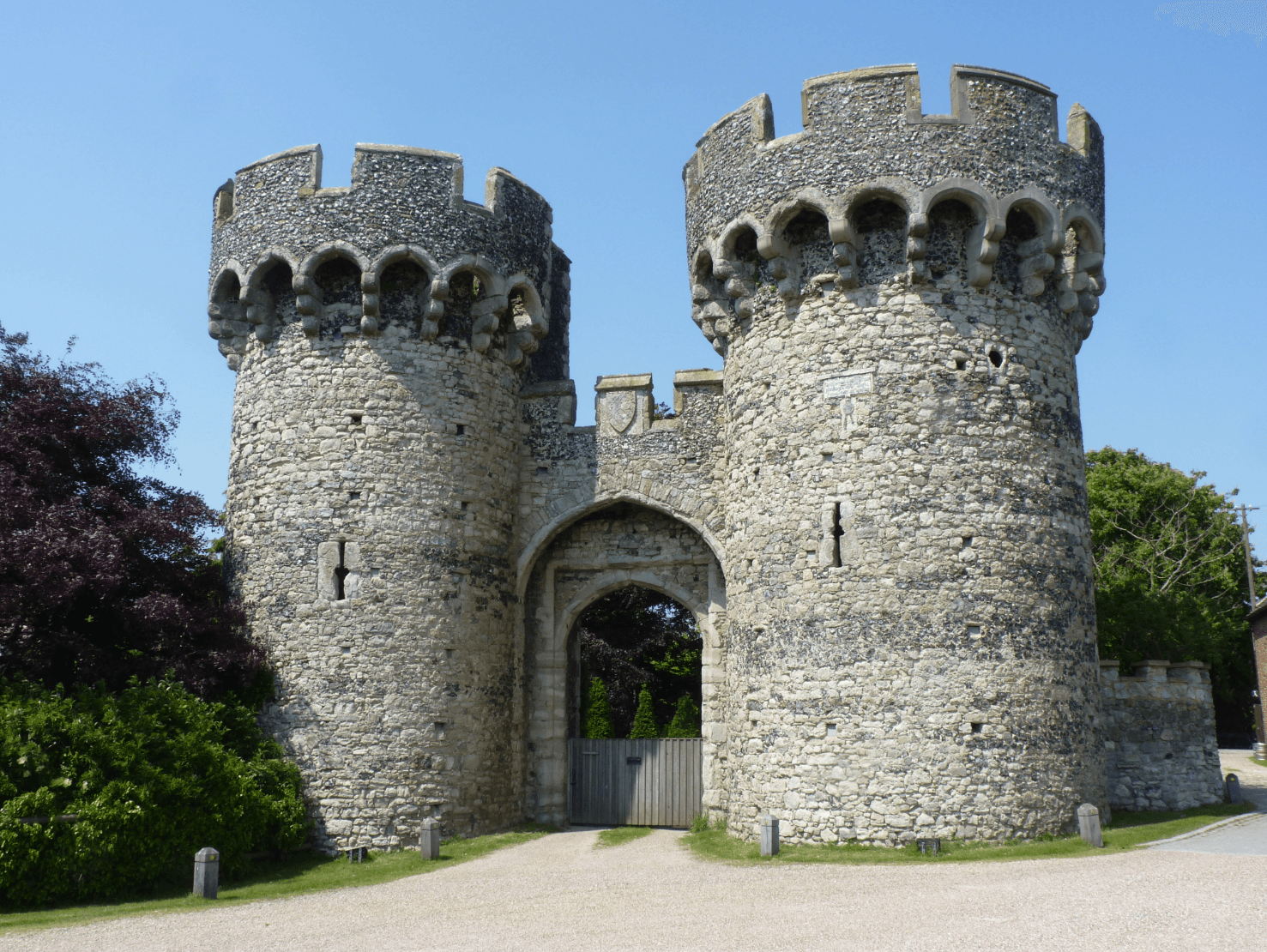
Cooling Castle was built around 1381 by John de Cobham as part of a chain of fortifications protecting the lower Thames during the Hundred Years' War. The twin-towered gatehouse and surviving curtain walls still stand on the edge of the marsh; the inner ward is private grazing land today, but the gatehouse and church are easy to take in from the lane.

The opening scene of Great Expectations

A hundred yards down the road, the churchyard of St James' Church is the opening setting of Dickens' Great Expectations — the bleak, marsh-fringed graveyard where young Pip first meets the convict Magwitch. The famous "Pip's Graves" still lie in the corner: 13 stone lozenges marking the small graves of children, which Dickens softened to five in the book because he thought no reader would believe the true number. The vestry walls are lined top to bottom with thousands of cockle shells, the emblem of St James the apostle.


5.8 miles · 45 minutes by car

Sheerness Beach

A traditional seaside town across the water

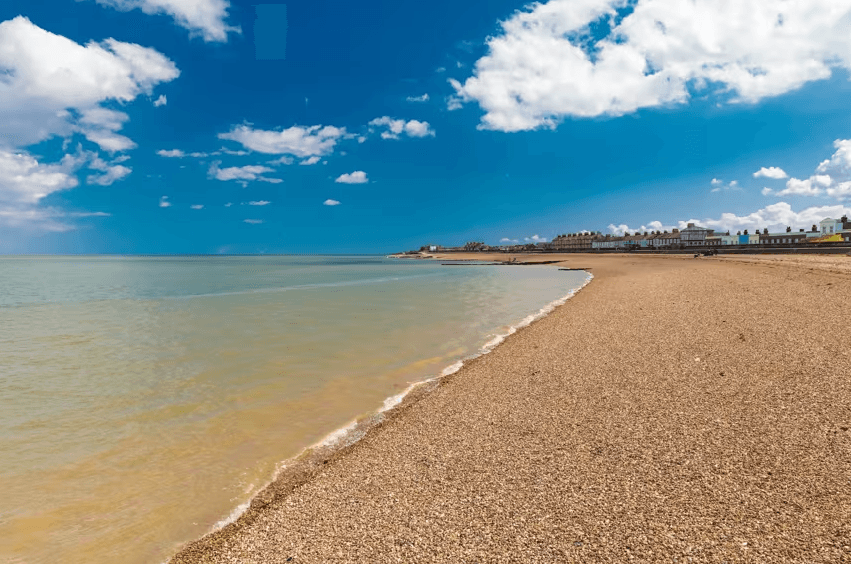
On the Isle of Sheppey, Sheerness sits where the Thames, Medway and North Sea meet. The beach is mainly shingle with patches of sand, fronted by a high sea wall with flood gates and stepped ramps down to the shore. It's an award-winning water-quality beach, with parking right behind it and a train station just 260m away if you'd rather leave the car.

Plenty for the whole family

The seafront is a proper traditional British seaside spread — amusement arcades, a children's play area, sports pitches, a climbing wall, skate ramps, a paddling pool and a leisure complex. At low tide, the rockpools reveal crabs, shrimps and other small sea creatures. Note: dogs aren't allowed on the beach from April to September (only on lead on the promenade).


6.1 miles · 20 minutes by car

Cliffe Pools RSPB

230 hectares of wetland on the peninsula

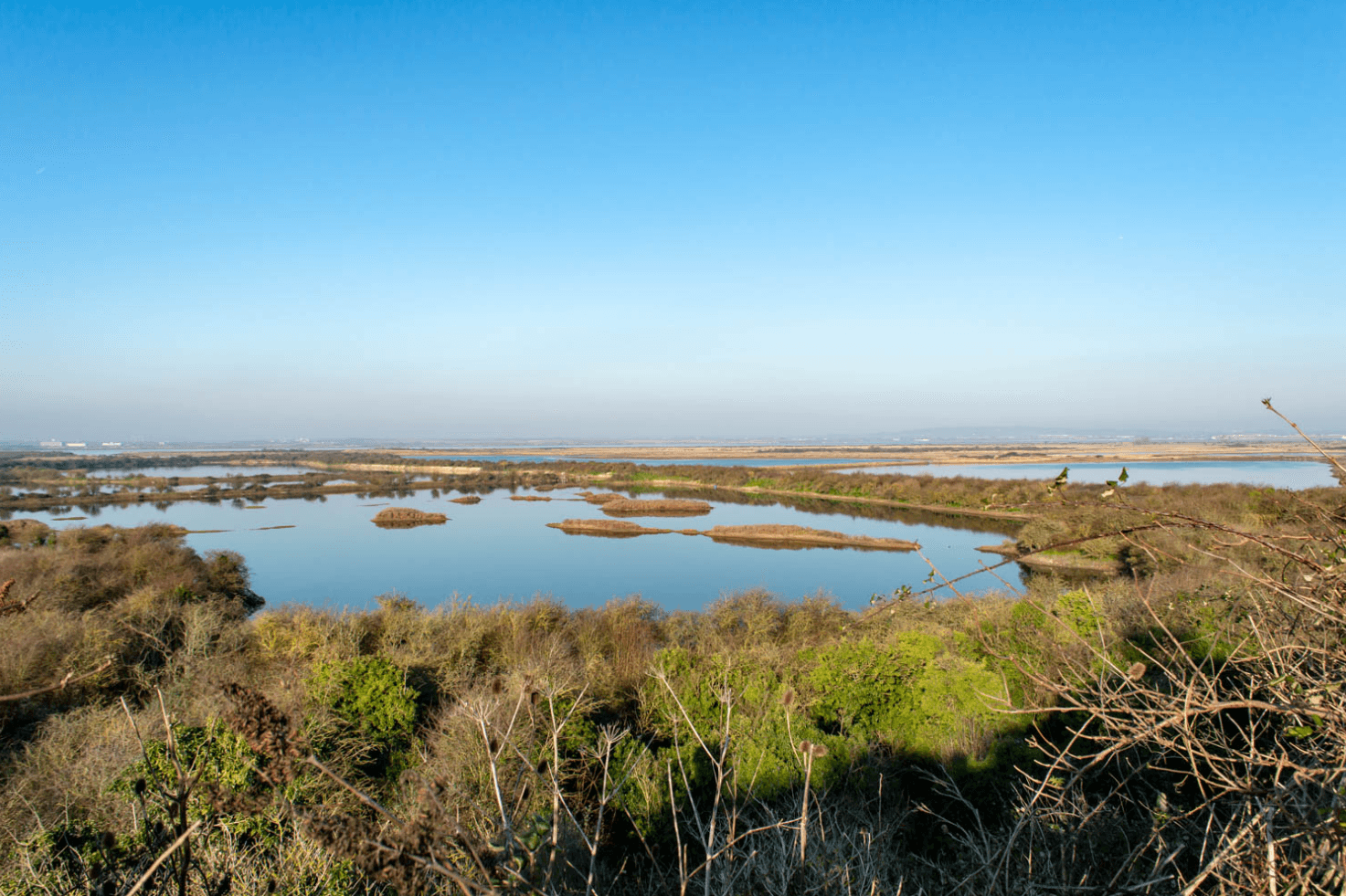
Cliffe Pools is one of the most important wetland reserves in southern England — a mosaic of saline lagoons, freshwater pools, saltmarsh and grassland across 230 hectares of the Hoo Peninsula, with the Thames Estuary horizon visible from almost every viewpoint. The pools were originally industrial workings; the RSPB has steered them into one of the country's premier coastal birding sites.

A different show in every season

Spring brings breeding avocets and common terns to the saltwater pools. Summer adds migrant waders and warblers. Autumn sees winter thrushes arrive and songbirds depart. Winter is busiest — vast flocks of ducks, dunlin and lapwing gather across the open water and marshes. Water voles and harvest mice live in the reed beds. Clearly-marked trails and raised viewpoints mean even an hour's visit is worth the drive. Car park open daily 10am to 4pm.


6.5 miles · 25 minutes by car

Upnor Castle

An Elizabethan artillery fort on the Medway

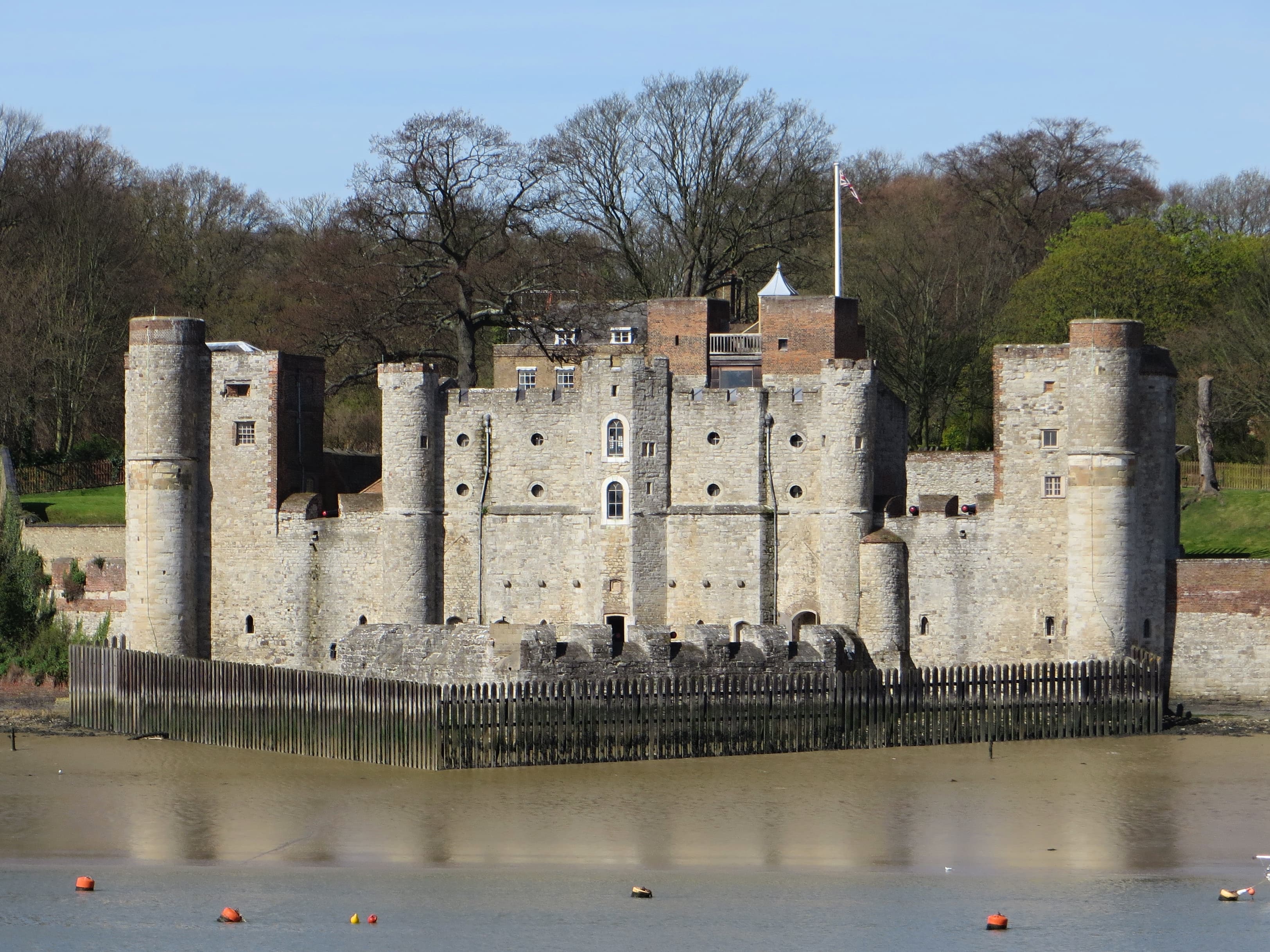
Upnor Castle was commissioned by Elizabeth I in 1559 and built over the following eight years to defend the Royal Navy's anchorage at Chatham Dockyard. It sits directly on the river, with a triangular bastion projecting into the Medway and a barrack range still largely intact behind. English Heritage manages the site today and you can walk every level from gun platform to water's edge.

The Royal Navy's darkest day

The fort saw action exactly once — but what an action. In June 1667 the Dutch fleet sailed straight up the Medway during the Second Anglo-Dutch War, burned the laid-up English flagships at Chatham, and towed the Royal Charles back to Holland as a trophy. Upnor's gunners and the chain across the river were the last serious line of defence; they drove the Dutch off eventually, but the damage was done. It remains one of the worst defeats in Royal Navy history.


6.5 miles · 30 minutes by car

Chatham Historic Dockyard

Three centuries of Royal Navy heritage

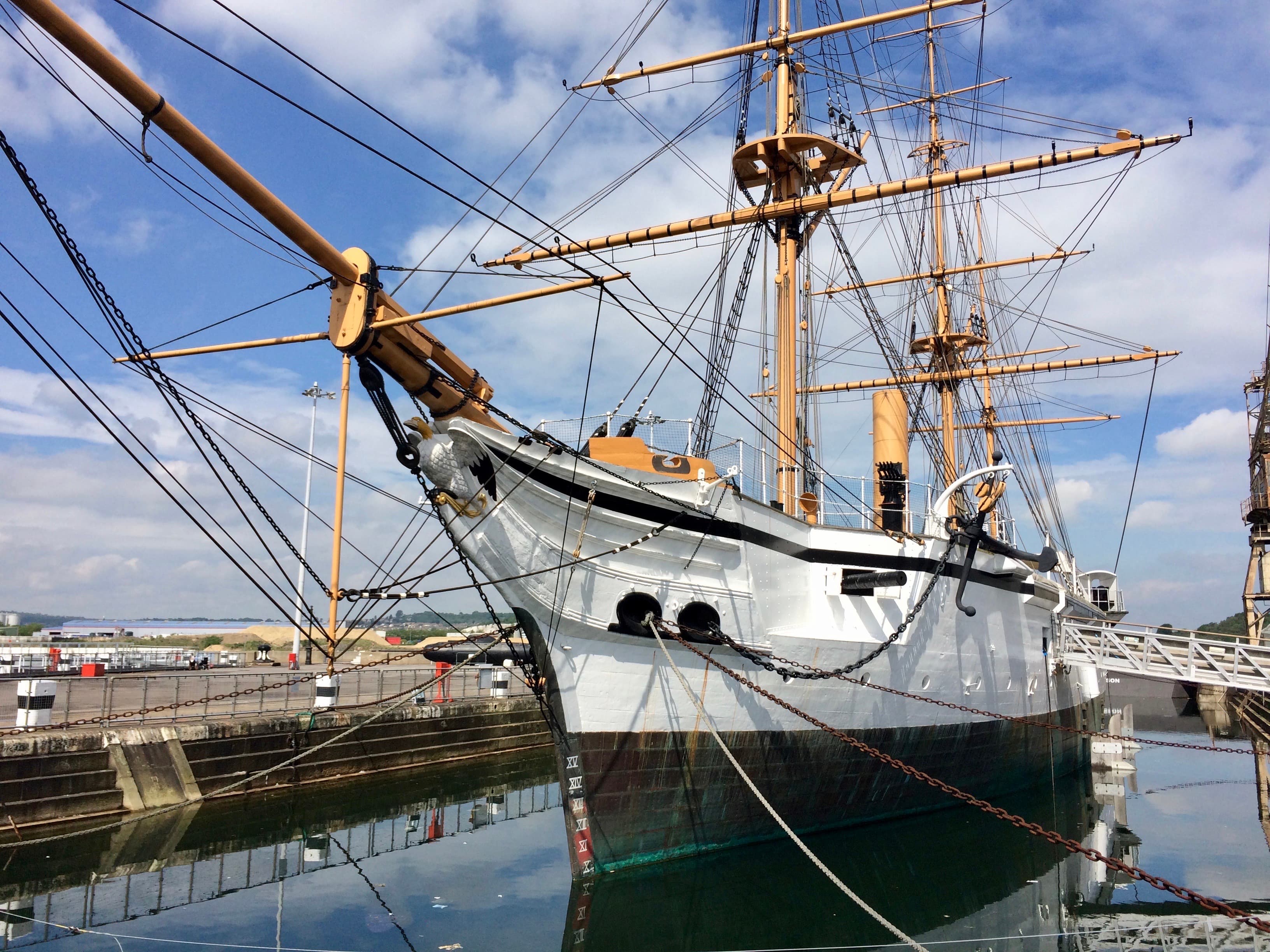
One of the most complete surviving dockyards from the age of sail, Chatham Historic Dockyard sprawls across 80 acres of working ropery, drydocks and galleries. Three historic ships are on site to board: HMS Cavalier, a WWII-era destroyer preserved as the National Destroyer Memorial; HMS Ocelot, a Cold War submarine you climb inside on a guided tour; and HMS Gannet, a Victorian sloop. Easily a full day, with the Master Ropemakers still working centuries-old machinery on the Ropewalk — one of the longest workshops in the world.

Tickets and timing

Tickets are valid for a full year at no extra cost, so even if your stay's short you can come back. The site's open daily April to November (reduced hours through February and March, mostly closed in deep winter). Submarine tours are the only ones that need pre-booking and they fill up — book online before you travel.


7.9 miles · 30 minutes by car

Rochester Castle

One of England's finest Norman keeps

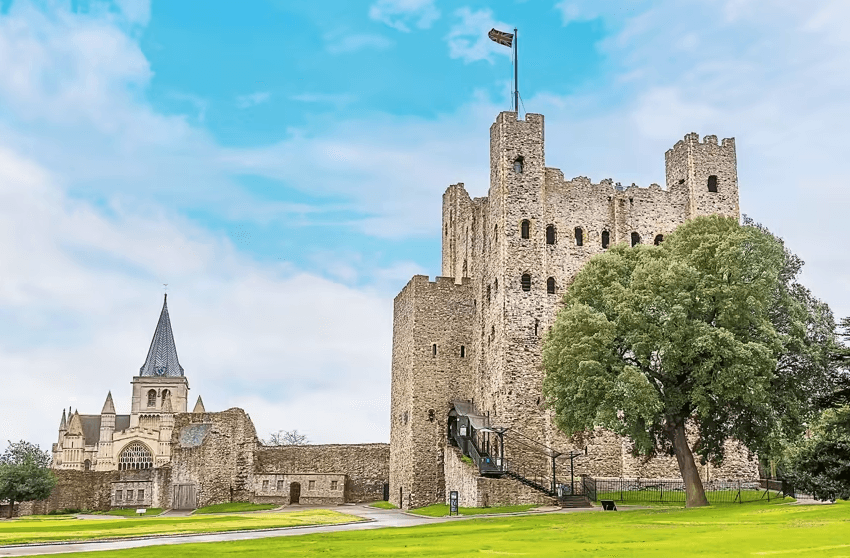
A short drive inland sits Rochester Castle — a 12th-century Norman fortress whose keep is reckoned one of the best-preserved of its kind in England or France. Built around 1127 by William of Corbeil, Archbishop of Canterbury, the keep rises 113 feet of Kentish ragstone in a near-perfect square, with three floors above a basement and pilaster buttresses at every corner.

King John's 1215 siege

The castle endured three sieges, the most dramatic being King John's assault in 1215, when one corner of the keep was destroyed by miners burning the timber props of a tunnel dug beneath it. The corner was rebuilt as a round tower — you can still spot the join. The castle and grounds are managed by English Heritage and open to the public, and Rochester Cathedral right next door is well worth a visit too.


7.9 miles · 30 minutes by car

Diggerland Kent

A theme park run on construction equipment

Diggerland Kent in Strood is a one-of-a-kind theme park where children (and adults) drive real diggers, dumpers, JCBs and excavators. Twenty-plus rides and drives, including the Spindizzy, the Dig-a-Round, mini-tractors, go-karts and dodgems, plus Adult Experience Days for the over-17s. Aimed at ages 4–14 but with plenty older visitors enjoy too — the kind of day out kids talk about for weeks.

The practical bits

Under-90cm children are admitted free; most rides require 90cm+ height, so check the ride-height chart on Diggerland's website before you set off. There's on-site parking, picnic areas, the Dig Inn café for hot meals and snacks, and clean facilities throughout. Bring sturdy shoes — there's a lot of climbing in and out of cabs.


9.3 miles · 30 minutes by car

Sittingbourne & Kemsley Light Railway

A genuine narrow-gauge steam railway

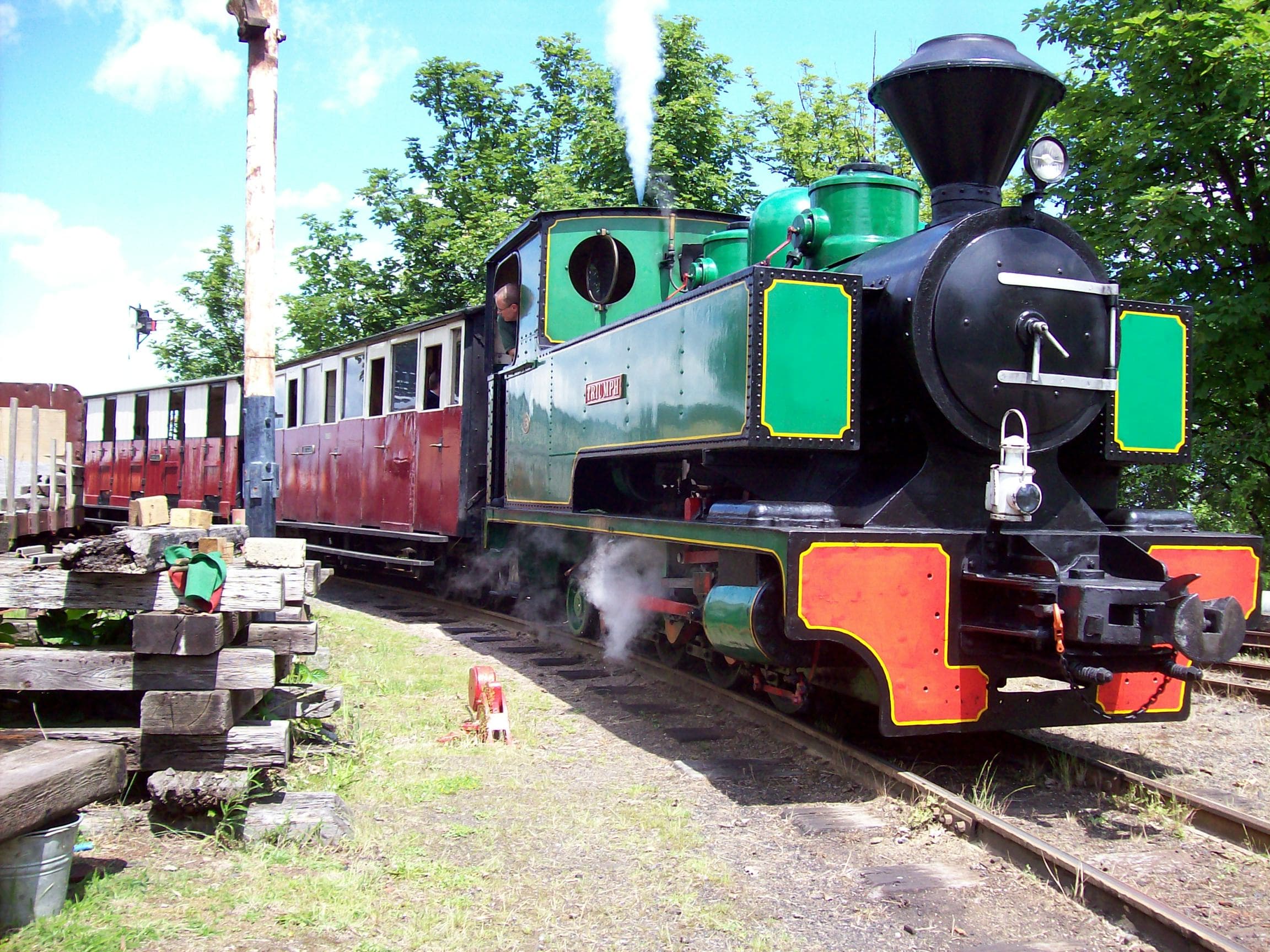
Two-foot-six-inch-gauge railway built in 1906 to haul paper from Sittingbourne's Edward Lloyd paper mills out to the deep-water docks at Kemsley. The mills closed in 2007 and the line survives only because volunteers kept the wheels turning. Now you can ride behind century-old steam locomotives along the original mile-and-a-half route across the marshes and salt-flats.

When to go

Runs Sundays April–October plus selected Saturdays and bank holidays. Visiting locomotives and themed days through the year (Santa Specials in December are a family favourite). Tickets are very fair — under £10 for adults, under £5 for children — and the whole experience is brilliantly old-school British: bunting, oily steam, friendly volunteers handing you a paper ticket from a wooden booth.


14.9 miles · 45 minutes by car

Leeds Castle

"The loveliest castle in the world"

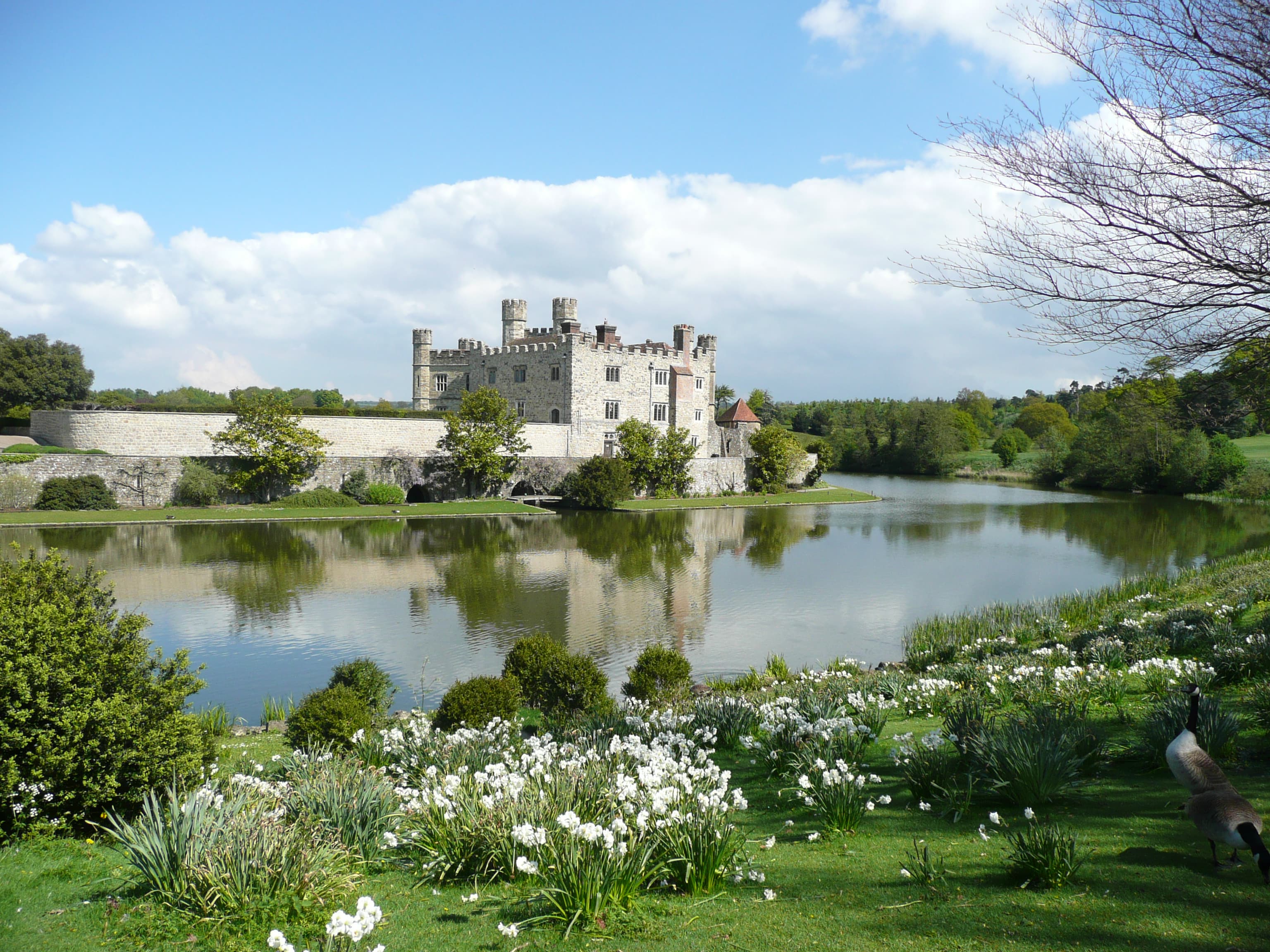
A 12th-century moated castle in 500 acres of parkland near Maidstone, home at various times to Henry VIII, Eleanor of Castile and six medieval queens. The keep rises out of two artificial islands in a lake formed by damming the River Len, giving it that "floating castle" silhouette — Lord Conway is said to have called it the loveliest castle in the world, and the name stuck.

A full day for the family

Beyond the state rooms, the grounds carry a yew maze with an underground grotto, a Birds of Prey Centre with daily flying displays, three children's playgrounds and an obstacle course. A regular calendar of events — jousting at the May bank holiday, Motors by the Moat in August, woodland trails at Easter and Christmas — makes it different every visit. Every ticket is valid for a full year.


15.1 miles · 40 minutes by car

Faversham & Shepherd Neame Brewery

Britain's oldest brewer in a Tudor market town

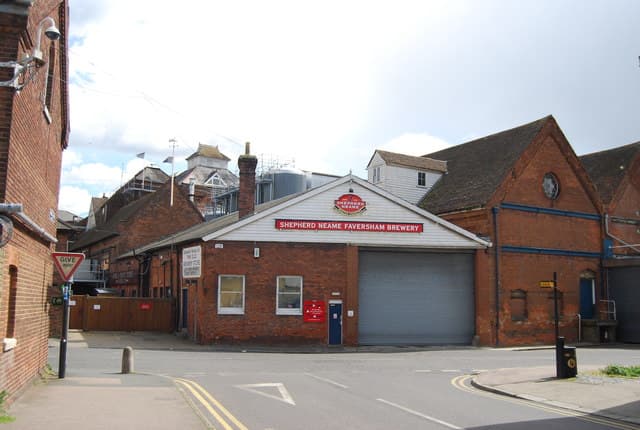
Faversham is one of the loveliest market towns in Kent — over 1,500 listed buildings packed into a tight medieval centre, a working creek harbour, and a Saturday market in the original square that's run for the best part of a thousand years. At its heart sits Shepherd Neame, established in 1698 and Britain's oldest continually-operating brewery. They still draw from the original artesian well that gave the brewery its name, and brew Spitfire and Bishop's Finger ales in the same Tudor brewhouse.

Brewery tours and what to drink

Public tours run several times a week — about an hour of brewhouse, mash tun and copper, then a guided tasting in the old hop store. Book ahead; tours fill up. Pair the tour with a wander round the town and lunch at one of the historic pubs the brewery owns.


15.5 miles · 40 minutes by car

Brogdale National Fruit Collection

The UK's national fruit collection

150 acres of orchards just outside Faversham hold the UK's National Fruit Collection — over 4,000 varieties of apple, pear, plum, cherry, quince, currant and nut, held in trust as a living gene bank for British orcharding. It's part working farm, part scientific reserve, part visitor centre, and entirely lovely.

Best times to visit

Spring (April–May) brings the blossom — pink and white clouds across all 150 acres for a few brief weeks. Autumn (September–October) is harvest, with rare-variety apples and pears sold from the market hall and orchard tours guided by the collection's curators. Self-guided walks year-round. Rarely on a standard tourist itinerary, so it's never crowded.


18.0 miles · 45 minutes by car

Mount Ephraim Gardens

10 acres of Edwardian gardens

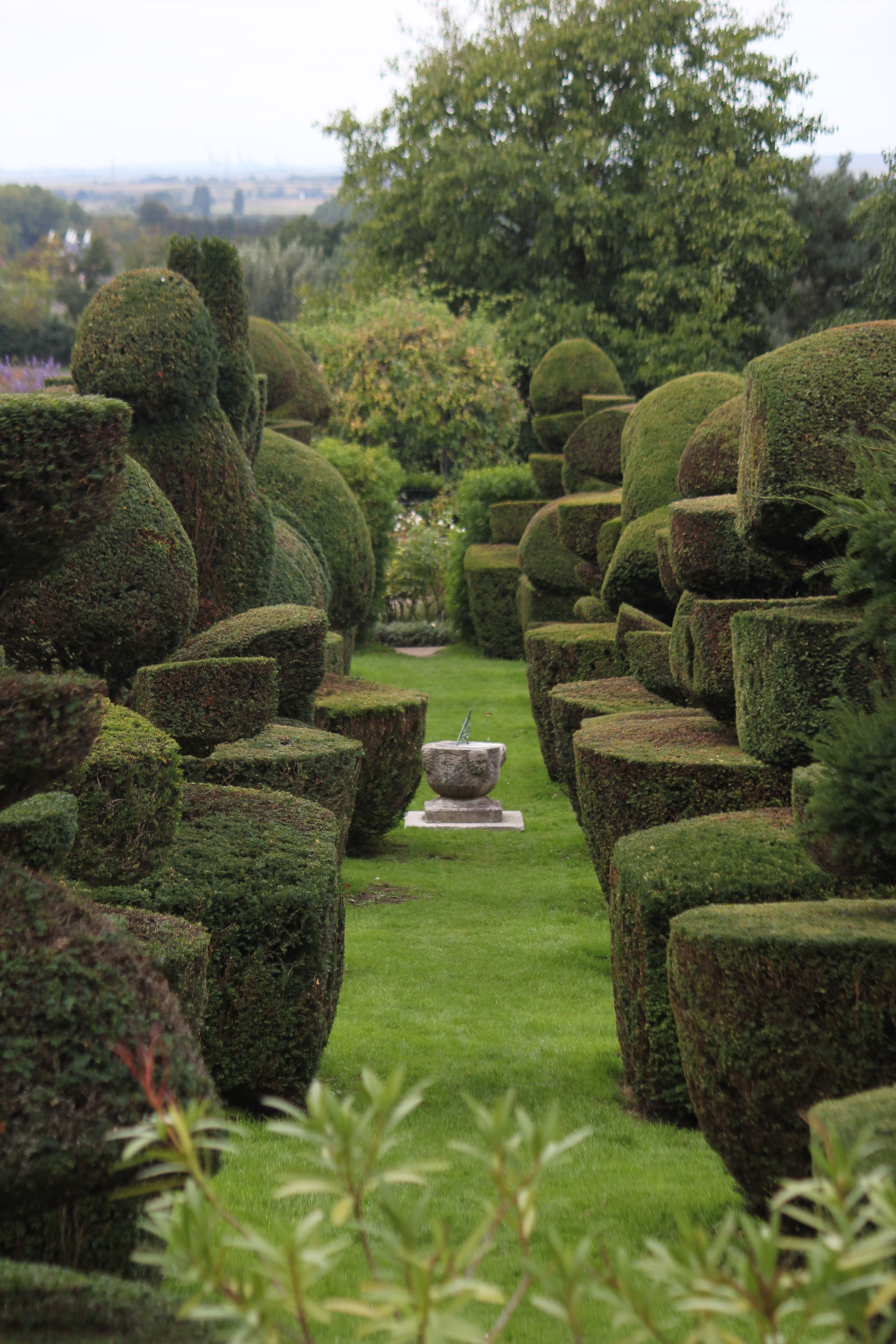
Country house gardens near Faversham, in the same family for eight generations. Terraced lawns descend to a small lake; mature trees frame a rose walk and herbaceous borders; a Japanese rock garden tucks into one corner; a wisteria-clad pergola arches over the kitchen garden. The bones were laid out in the 1900s and the gardens have been kept in the same Edwardian spirit ever since — formal but never fussy.

A slow, quiet day

Café in the old stables for lunch or afternoon tea. Open most days through summer; check the website for winter hours. Particularly beautiful in May (wisteria) and August (roses and late herbaceous border in full flow).


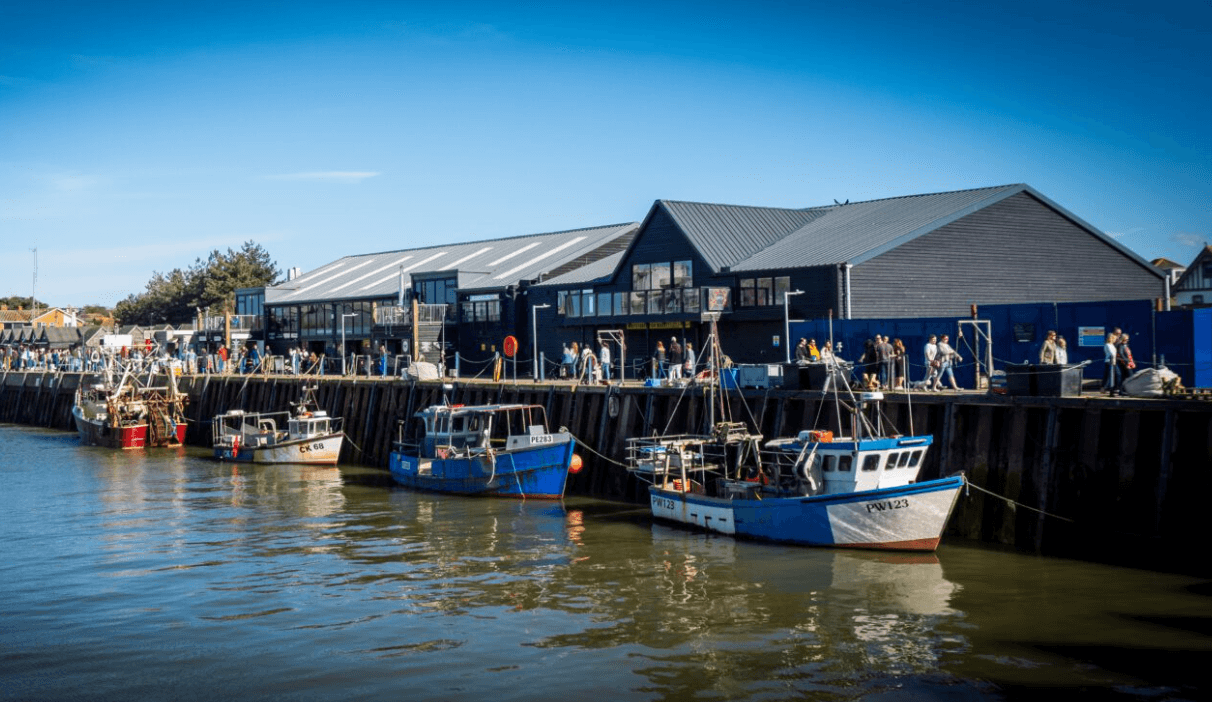
Colourful beach huts and shingle beach at Whitstable
Photo: Wikimedia Commons
18.2 miles · 55 minutes by car

Whitstable

Pearl of the Kent coast

Whitstable has been famous for its oysters for more than two thousand years — Roman texts already mention it as an excellent source. The town today is one of the prettiest seaside spots in Kent: a working harbour, colourful wooden beach huts along the shingle shoreline, independent shops down Harbour Street and a clutch of seafood restaurants that punch well above their weight. Try the oysters straight from the harbour stalls, or sit down at Wheelers Oyster Bar (operating since 1856) or The Lobster Shack on the beach.

When to visit

The Whitstable Oyster Festival in late July is the town's biggest event of the year — three days of food stalls, live music, parades and street theatre. Outside festival season, the harbour market runs every weekend year-round, selling locally landed fish, oysters, crafts and produce. The west-facing shoreline is also known for its sunsets across the Thames Estuary.


23.0 miles · 55 minutes by car

Canterbury Cathedral

England's most important Christian site

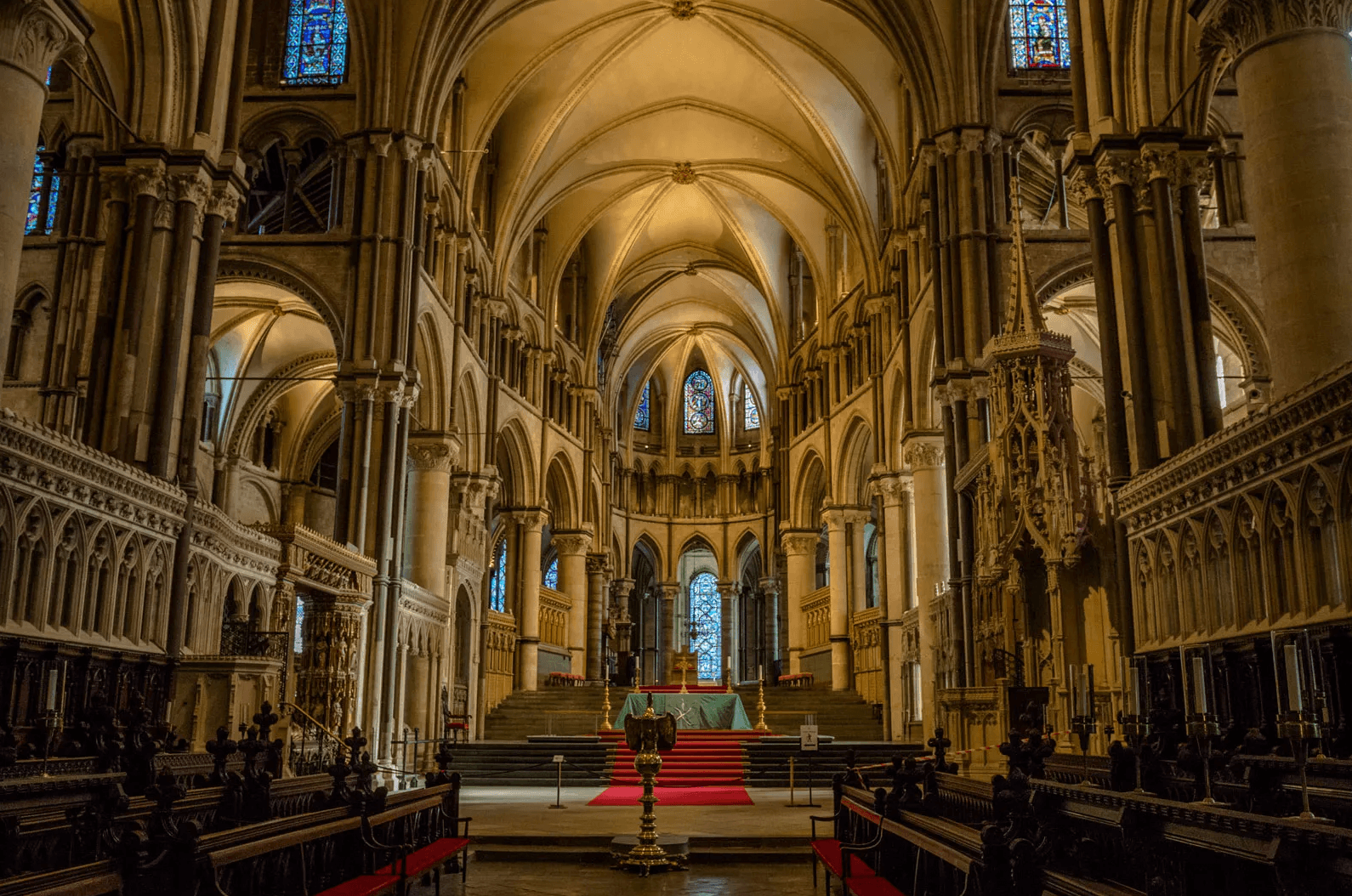
UNESCO World Heritage Site, seat of the Archbishop of Canterbury, mother church of the worldwide Anglican Communion. The nave is one of the finest examples of English Gothic architecture; the crypt is the largest Norman crypt in England; the cloisters connect to the ancient priory buildings. Christianity has been practised on this spot continuously since St Augustine arrived in 597 AD — over fourteen hundred years.

Becket, Chaucer and the city

The cathedral was the site of Thomas Becket's murder by four of Henry II's knights in 1170 — you can still stand on the spot. The shrine that grew up around the martyrdom became one of medieval Europe's most important pilgrimage destinations and the inspiration for Chaucer's Canterbury Tales. Pair the cathedral with a wander through the medieval city centre — a river boat trip down the Stour, coffee on Burgate, an evening show at the Marlowe Theatre.


23.3 miles · 50 minutes by car

Howletts Wild Animal Park

Conservation-focused, near Canterbury

Established in 1957 by John Aspinall and now run by the Aspinall Foundation, Howletts sits across 90 acres of ancient parkland near Canterbury. It's home to some of the largest family groups of western lowland gorillas anywhere in the world, the UK's biggest breeding herd of African elephants, and one of the largest captive groups of lion-tailed macaques. Tigers, clouded leopards, black rhinos and red river hogs fill out the rest of the collection.

Hands-on animal experiences

Beyond standard admission, visitors can book one-to-one keeper experiences from £15 — feed the elephants, go behind the scenes with the gorillas, meet black rhinos or hand-feed anteaters. The Aspinall Foundation has rewilded gorillas and black rhinos back to Africa over the past two decades, so a visit directly funds active conservation work.

Want to stay on the park? Plenty to do — see the facilities →
Check availability — book direct